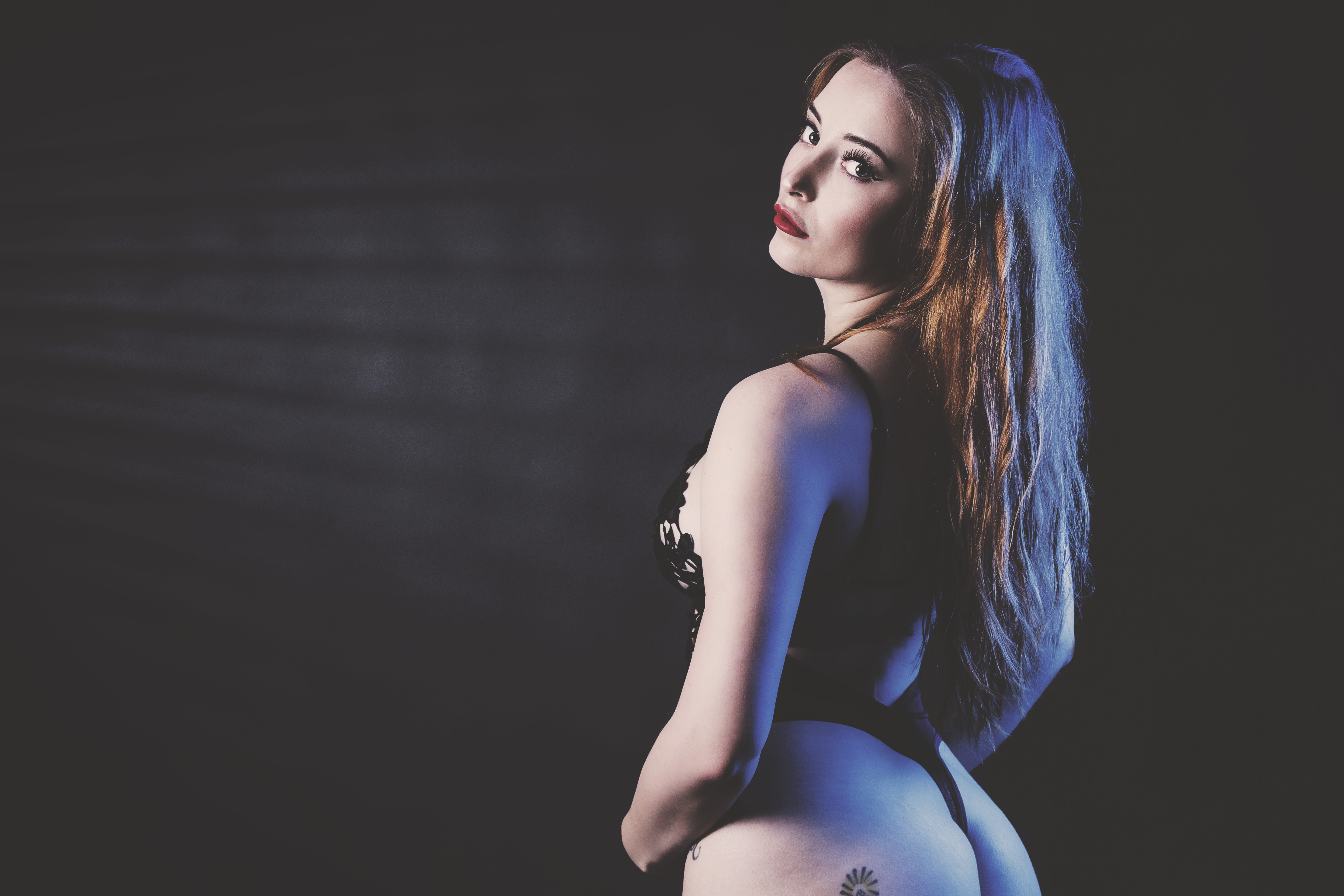
The Death of the Doll: Why 'Texture' Drives Higher Engagement on OnlyFans
The era of the airbrushed doll is over. In the age of AI generation, perfection is a liability. This article explores the science of 'Haptic Visuality' and the 'Uncanny Valley'.
For the better part of a decade, the "Instagram Face" reigned supreme. Defined by poreless skin, impossible proportions, and the soft, diffused glow of the ring light, this aesthetic turned creators into living dolls.
But in 2025, the Doll is dying.
A massive shift is occurring in the adult content economy. Subscription retention rates for "perfect" creators are dropping, while engagement for creators embracing a raw, tactile aesthetic is skyrocketing. This isn't a coincidence; it is a psychological reaction to two powerful forces: AI saturation and Digital Fatigue.
At Obsidian Noir, I have moved away from the airbrush. I am doubling down on Texture. Here is the science and strategy behind why showing your pores, sweat, and goosebumps is the smartest business move you can make this year.
The AI Threat and the "Uncanny Valley"
The rise of AI-generated adult content is the single biggest threat to human creators. AI models can generate "perfect" women with mathematically flawless skin and impossible curves.
If you edit your photos to look plastic, smooth, and flawless, you are competing with robots. And robots are cheaper than you.
Proof of Life
This is where the concept of the "Uncanny Valley"—a term coined by roboticist Masahiro Mori—comes into play. As artificial figures look more human, they eventually hit a point where they look "almost" real but slightly "off," causing a feeling of revulsion in the viewer.
AI struggles with the chaos of biology. It struggles with a jagged scar, the specific texture of goosebumps, or the way sweat beads on the upper lip.
- The Strategy: By embracing high-contrast photography that highlights skin texture, you provide "Proof of Life." You signal to the subscriber’s brain: I am human, I am warm, and I am real.
- The Result: This builds the "Girlfriend Experience" (GFE) trust that AI cannot replicate, justifying your subscription price.
The Science of "Haptic Visuality"
Why does a photo of a woman in latex, lit by a hard flash, feel more "sexy" than a soft-focus nude? The answer lies in a film theory concept called Haptic Visuality.
Developed by theorist Laura U. Marks, Haptic Visuality refers to images that trigger the sense of touch through the eyes. When a viewer sees a highly textured image—like oil on skin, the rough grain of leather, or the sharpness of a collarbone—their brain creates a "phantom touch" sensation.
Triggering the Mirror Neurons
Soft, airbrushed photos slide off the eye. They are visual "wallpaper." Textured photos engage Mirror Neurons. When a subscriber sees the tension of a hand gripping a thigh, or the indentation of a strap against the skin, they can "feel" that pressure.
- Obsidian Application: This is why I use specular (hard) lighting. I want to catch the shine. I want the viewer to feel the resistance of the fabric. By prioritising texture, I move the viewer from a passive observer to an active participant in the scene.
The "Gonzo" Shift & Gen Z Authenticity
Culturally, we are seeing a rejection of the curated aesthetic. Gen Z and younger Millennials are driving a trend towards "Digital Realism" or the "Gonzo" aesthetic.
The top-performing posts on social media are no longer the perfectly staged studio shots; they are the "photo dumps," the blurry flash photos, and the messy bedrooms.
The "Messy" Narrative
In the context of OnlyFans, "Texture" implies a narrative.
- The Smooth Photo: Says "I spent 2 hours getting ready and editing this." It feels like a performance.
- The Textured Photo: Says "I just did this." It feels like a captured moment.
Subscribers pay for intimacy. A photo that shows flushed skin, messy hair, and sweat implies that an act has taken place. It feels voyeuristic and authentic. By allowing the "mess" of texture into your portfolio, you are selling the reality of the encounter, which is infinitely more valuable than the fantasy of the mannequin.
Executing the Look: Lighting the Flaw
How do you achieve this look without just taking "bad" photos? There is a fine line between "Editorial Texture" and "Unflattering."
Hard Light vs. Soft Light
Softboxes (big, diffused lights) are designed to hide texture. They fill in pores and wrinkles. At Obsidian Noir, I often use Hard Light (Standard Reflectors or Snoots). Hard light casts shadows.
- If you have a drop of sweat running down your neck, soft light makes it disappear. Hard light catches the highlight and casts a micro-shadow, making the droplet pop in 3D.
- I use this to accentuate muscle tone, the curve of the spine, and the texture of lingerie.
Post-Production Restraint
The "Death of the Doll" means changing how you edit.
- Stop: Using "Frequency Separation" to blur skin into oblivion.
- Start: Using "Clarity" and "Structure" sliders (sparingly) to enhance the mid-tone contrast.
- The Obsidian Rule: I remove temporary blemishes (a pimple that appeared today), but I keep permanent texture (scars, freckles, stretch marks). These are your visual fingerprints.
Conclusion: Perfection is Boring
In a marketplace flooded with synthetic perfection, being "flawed" is your superpower.
Texture is intimate. Texture is expensive. Texture is human. By dropping the filters and stepping into the hard light of an Obsidian Noir shoot, you aren't just taking a picture; you are reclaiming your humanity from the algorithm. And that is what your subscribers are truly paying for.
References & Sources
- Mori, M. (1970/2012). "The Uncanny Valley". IEEE Robotics & Automation Magazine. (The foundational theory on human reaction to human-like replicas).
- Marks, L.U. (2002). Touch: Sensuous Theory and Multisensory Media. University of Minnesota Press. (Explaining Haptic Visuality and how eyes can 'feel').
- Sung, M. (2022). "The rise of the 'casual' Instagram aesthetic". Mashable. (Analysis of the shift away from curated perfection toward 'messy' authenticity).
- Turkle, S. (2011). Alone Together: Why We Expect More from Technology and Less from Each Other. Basic Books. (Context on why humans crave authentic connection in a digital age).
AUTHOR
Carl Hewlett
Press Photographer & Founder of Obsidian Noir